Building Life from Scratch: Scientists Create Complex Synthetic Cells
Imagine building a living cell like assembling a sophisticated machine, complete with multiple interacting parts that communicate with each other. Scientists have just taken a giant leap toward making this reality by creating synthetic cells with two different types of programmable molecular doorways.
Listen to This Article
AI-generated discussion • ~5 min
In a groundbreaking achievement that brings us closer to understanding the very essence of life, researchers have successfully created synthetic cells equipped with multiple types of interacting molecular components. This breakthrough, published in Nature Chemistry, represents a significant step toward building functional artificial life from the ground up.
The challenge of recreating cellular complexity has long puzzled scientists. Natural cells are incredibly sophisticated systems where multiple membrane proteins work together in perfect harmony, like an orchestra where each instrument must play its part at exactly the right time. Until now, synthetic biology has struggled to replicate this level of coordination in artificial systems.
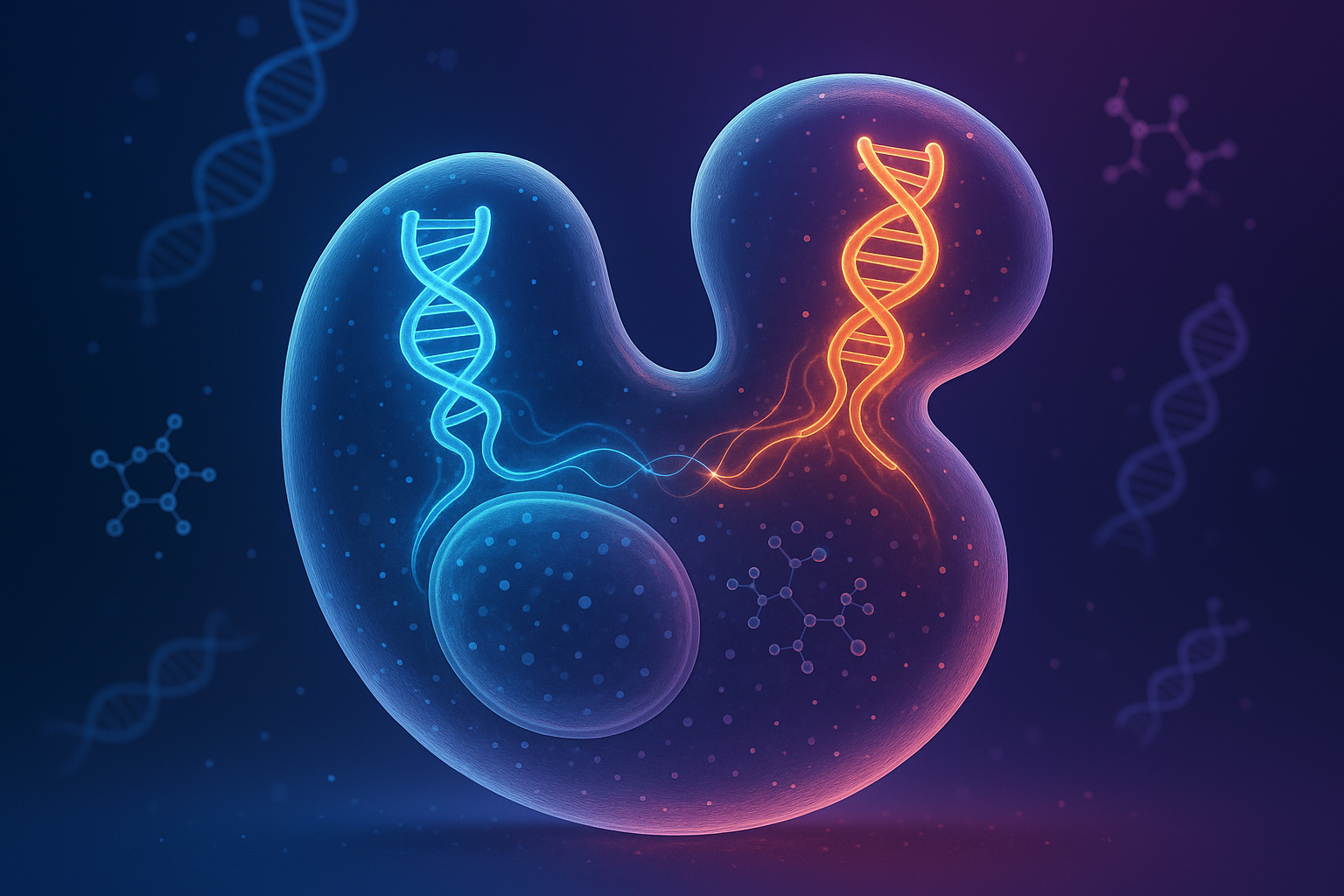
The research team, led by scientists from multiple institutions, developed what they call a double-necked synthetic cell microreactor (DCM). Think of it as building a miniature factory with two different types of smart doorways that can talk to each other and coordinate their activities.
The key innovation lies in the use of DNA-based pores. Unlike traditional approaches that rely on single components, this system incorporates two different types of dynamic, programmable molecular gates within a single artificial membrane. It's like having two different types of security systems at your home that can communicate and work together to control who enters and exits.
The researchers successfully demonstrated that these DNA-based pores can be programmed to work together in coordinated ways within artificial membranes. This is similar to teaching two different computer programs to share information and make decisions together, but at the molecular level.
The results proved that synthetic cells can house multiple interacting membrane components simultaneously. This represents a crucial milestone because it shows that scientists can recreate the sophisticated molecular machinery found in living cells using entirely synthetic materials. The artificial system successfully mimicked the complex interplay between different membrane proteins found in natural cells.
What makes this research particularly exciting is that it establishes a new platform for studying cellular functions in controlled, artificial environments. Scientists can now investigate how different cellular components interact without the complexity and variability of living systems, like having a perfect laboratory model that can be precisely controlled and modified.
The implications of this breakthrough extend far beyond the laboratory. By successfully creating synthetic cells with multiple interacting components, scientists are getting closer to understanding the fundamental principles that govern life itself. This knowledge could revolutionize medicine by enabling the design of programmable cellular machines for drug delivery, biosensing, and therapeutic applications.
This research represents more than just a technical achievement; it's a major leap toward answering one of biology's most fundamental questions: what makes life possible? By building life-like systems from scratch, scientists gain insights into how natural cells evolved their remarkable complexity and efficiency. The ability to create artificial cells with coordinated, interacting components opens new possibilities for biotechnology applications that could transform healthcare, environmental remediation, and manufacturing processes.
Real-World Impact
Quick Takeaways
- Revolutionary drug delivery systems using programmable artificial cells that can target specific tissues
- Advanced biosensors capable of detecting diseases at the molecular level with unprecedented precision
- Therapeutic applications including artificial cells that can repair damaged tissues or fight infections
- Enhanced understanding of fundamental life processes leading to new treatments for genetic diseases
- Development of controllable cellular machines for environmental cleanup and industrial biotechnology applications
This breakthrough in synthetic cell technology promises to transform multiple fields by providing unprecedented control over cellular behavior. In medicine, programmable artificial cells could serve as smart drug delivery vehicles that respond to specific biological signals, releasing medications exactly when and where needed. These synthetic systems could also function as living biosensors, detecting disease markers with greater sensitivity and specificity than current diagnostic tools.
The research also opens new avenues for understanding and treating complex diseases. By recreating cellular processes in controlled artificial environments, scientists can study disease mechanisms without the complexity of living systems, potentially accelerating the development of new therapies. Furthermore, the ability to build coordinated cellular machines from synthetic components could lead to revolutionary treatments for genetic disorders, tissue repair, and even the creation of artificial organs with programmable functions.
Beyond healthcare, this technology could enable the development of biological manufacturing systems that produce valuable compounds, environmental remediation tools that can selectively break down pollutants, and advanced materials with self-healing or adaptive properties. The fundamental insights gained from building life-like systems may also inform our understanding of how life originated and evolved, with implications for astrobiology and the search for life elsewhere in the universe.
For Researchers & Scientists - Technical Section
The research team developed a double-necked synthetic cell microreactor (DCM) incorporating two distinct types of dynamic DNA-based pores within artificial membranes. The methodology involved engineering DNA-based components that could replicate the complex interplay between different membrane proteins found in natural cells. The researchers successfully demonstrated coordinated interaction between multiple synthetic components within a single artificial cell structure, proving that synthetic biology can recreate sophisticated molecular machinery using entirely synthetic materials and establishing a controlled platform for studying cellular functions.
Methodology & Approach
Methodology & Approach
The research team employed a multi-disciplinary approach combining synthetic biology, membrane biophysics, and DNA nanotechnology to create the double-necked synthetic cell microreactor system. The methodology centered on engineering two distinct types of dynamic DNA-based pores that could be incorporated into artificial membrane structures while maintaining their ability to interact and communicate with each other.
The experimental design focused on recreating the complex molecular interactions found in natural cellular membranes using entirely synthetic components. Researchers developed sophisticated DNA-based architectures that could mimic the behavior of natural membrane proteins, with particular emphasis on achieving coordinated functionality between multiple pore types within a single artificial cell structure. The system was designed to serve as a controlled platform for studying cellular processes while demonstrating the feasibility of creating complex synthetic biological systems with multiple interacting components.
Key Techniques & Methods
- DNA Nanotechnology: Engineering DNA molecules into functional structures that can perform specific cellular tasks
- Synthetic Cell Construction: Building artificial cells from non-living materials that mimic natural cellular functions
- Membrane Engineering: Creating artificial membranes capable of housing multiple types of functional proteins
- Dynamic Pore Design: Developing controllable molecular gates that can change their properties in response to signals
- Multi-component Integration: Coordinating multiple synthetic biological components within single artificial systems
- Biomimetic System Development: Creating synthetic systems that replicate the behavior of natural biological processes
Key Findings & Results
- Successfully created synthetic cells with two different types of interacting DNA-based pores in a single artificial membrane
- Demonstrated that DNA-based components can mimic the complex interplay between different membrane proteins found in living cells
- Proved that multiple synthetic components can interact and communicate within a single artificial cell structure
- Showed that synthetic cells can house multiple interacting membrane components simultaneously, replicating natural cellular complexity
- Established that DNA-based pores can be programmed to work together in coordinated ways within artificial membranes
- Created a new platform for studying cellular functions in controlled, artificial environments using entirely synthetic materials
Conclusions
The successful development of the double-necked synthetic cell microreactor represents a significant advancement in synthetic biology, demonstrating that complex cellular machinery can be recreated using entirely artificial components. The research proves that multiple DNA-based pores can function cooperatively within synthetic membranes, mimicking the sophisticated interactions found in natural cells. This breakthrough establishes a foundation for creating more complex artificial biological systems and provides a controlled platform for investigating fundamental cellular processes, while advancing our capability to engineer programmable cellular machines for therapeutic and biotechnological applications.
-- readers