Evolution Under Fire: Plants Race Against Climate Extinction
In the ultimate test of survival, scientists planted thousands of Arabidopsis plants across 30 locations from alpine peaks to desert valleys to answer one crucial question: can evolution outpace climate change? The answer reveals both hope and heartbreak.
Listen to This Article
AI-generated discussion • ~6 min
Imagine running a race where the finish line keeps moving further away. That's essentially what plants face as our climate rapidly changes. For the first time, scientists have conducted a massive real-world experiment to see if evolution can keep up with the pace of environmental change, and the results are both remarkable and sobering.
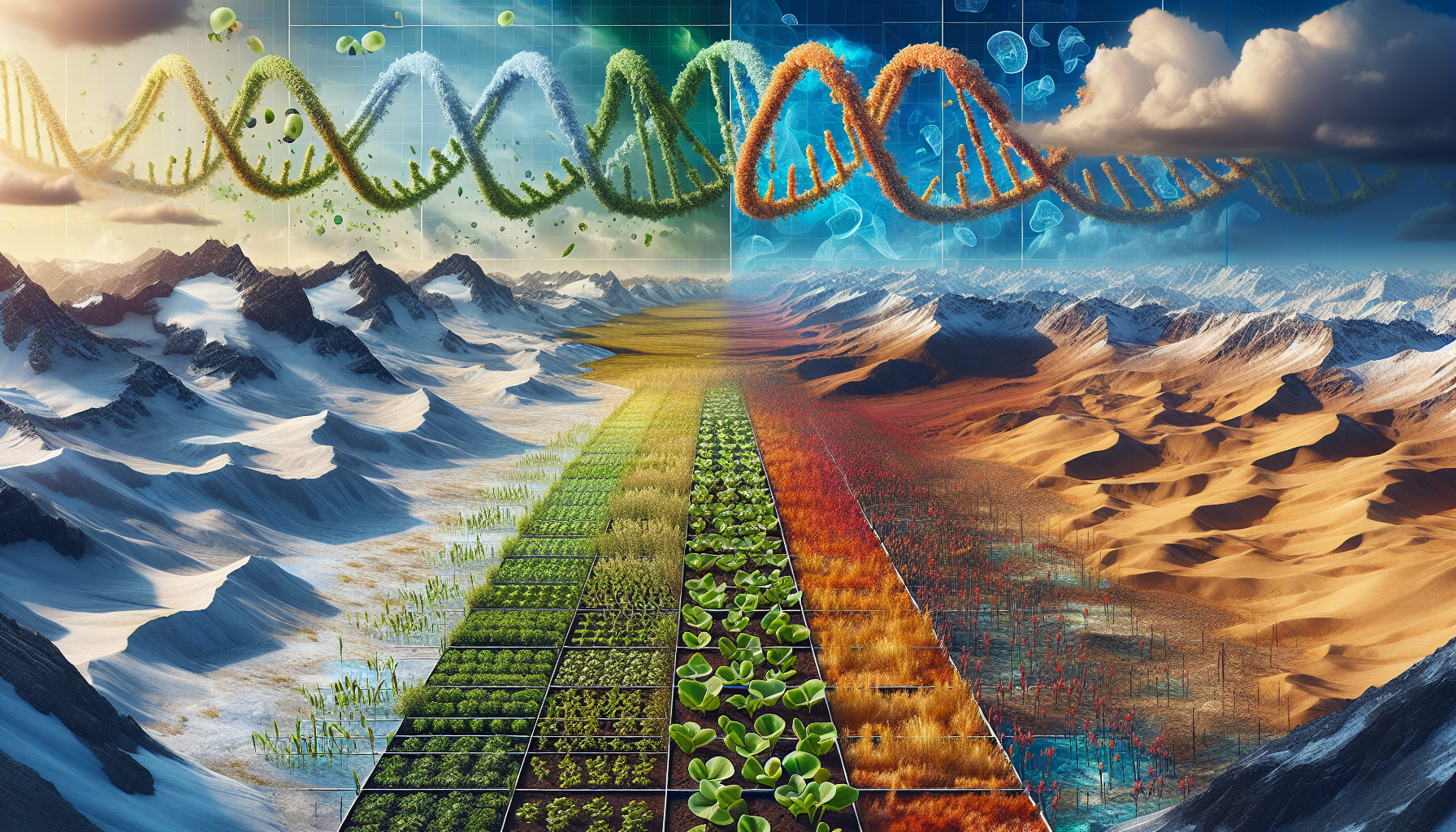
The study, led by the GrENE Network Consortium, planted 360 small plots of Arabidopsis thaliana across 30 locations spanning from alpine mountains to scorching deserts. Think of it as setting up identical genetics laboratories in nature's most diverse classrooms.
For five years, researchers tracked approximately 70,000 surviving plants using whole-genome pooled sequencing. This is like taking genetic fingerprints of entire populations to see how their DNA changes over time.
The race between evolution and extinction played out dramatically across different environments. In moderate climates, the plants showed remarkable adaptability. Allele frequency shifts occurred in as few as 3-5 generations, which is like watching a population learn new survival skills in fast-forward.
The results revealed a clear pattern: evolution is surprisingly predictable. Plants in similar climates developed similar genetic changes, like students in different schools all learning the same math concepts when faced with similar problems. Meanwhile, plants in contrasting environments evolved differently, adapting their genetic toolkits to match their local challenges.
However, the story takes a darker turn in extremely hot and dry locations. Here, evolution couldn't keep pace with environmental stress. Instead of the orderly genetic changes seen in moderate climates, researchers observed erratic, unpredictable genetic shifts that preceded complete population collapse. It's like watching a well-orchestrated symphony dissolve into chaos before falling silent entirely.
Most sobering of all, populations in the most extreme locations often died out completely within just three years. These weren't gradual declines but rapid collapses, suggesting there are hard limits to how quickly life can adapt to environmental change.
The researchers identified specific genetic variants linked to thermal-stress sensing and spring-flowering timing, revealing the molecular machinery that either enables survival or fails under pressure. These genetic switches are like the difference between a thermostat that can adjust to temperature changes and one that breaks under extreme conditions.
This research provides the first direct, large-scale experimental evidence of evolution's race against climate change. The findings suggest that while some plant populations can adapt to moderate warming through rapid evolution, those facing extreme heat and drought may simply run out of time. It's a sobering reminder that evolution, despite its incredible power, has limits when change happens too fast.
The implications extend far beyond a single plant species. These results offer a framework for understanding which natural populations might survive climate change and which may need human intervention to avoid extinction. Most importantly, the discovery that chaotic genetic changes precede population collapse could help scientists identify at-risk populations before it's too late.
Real-World Impact
Quick Takeaways
- Provides first direct evidence of evolution's speed limits under real climate conditions across diverse environments
- Identifies genetic early warning signs that could predict which natural populations face extinction risk
- Reveals that moderate climate change allows rapid adaptation, but extreme conditions cause population collapse
- Offers framework for conservation efforts to identify which species need immediate intervention
- Demonstrates that evolution can occur in 3-5 generations, much faster than previously documented in nature
This groundbreaking research fundamentally changes how we understand the relationship between evolution and climate change. By providing the first large-scale experimental evidence of evolution in action across diverse real-world environments, it offers concrete data to inform conservation strategies and climate adaptation planning.
The discovery that chaotic genetic changes precede extinction could revolutionize conservation biology, giving scientists a new tool to identify at-risk populations before they collapse. This early warning system could be crucial for protecting biodiversity as climate change accelerates.
Perhaps most significantly, the research reveals both the promise and limits of evolutionary rescue. While rapid adaptation in moderate conditions offers hope for many species, the complete population collapse in extreme environments underscores the urgent need for aggressive climate action and targeted conservation interventions.
For Researchers & Scientists - Technical Section
The study employed a coordinated experimental evolution approach across 30 geographically diverse sites, establishing 360 replicated plots of Arabidopsis thaliana populations. Over five years, researchers used whole-genome pooled sequencing to analyze approximately 70,000 surviving individuals, tracking allele frequency changes across multiple generations to quantify evolutionary responses to natural climate variation.
Methodology & Approach
Methodology & Approach
The research utilized a distributed experimental evolution design coordinated by the GrENE Network Consortium. Researchers established standardized plots across 30 locations spanning alpine to desert climates in Western Europe, the Mediterranean, the Levant, and North America. Each site maintained multiple replicated populations to ensure statistical robustness.
The experimental framework tracked populations through multiple generations over five years, leveraging Arabidopsis thaliana's rapid life cycle to observe evolutionary changes in real-time. Whole-genome pooled sequencing of approximately 70,000 surviving plants enabled detection of allele frequency shifts at unprecedented resolution across diverse environmental gradients.
Key Techniques & Methods
- Distributed Experimental Evolution: Coordinated evolution experiments across 30 geographically diverse outdoor sites
- Whole-Genome Pooled Sequencing: DNA analysis technique reading genetic material from multiple individuals simultaneously
- Allele Frequency Tracking: Monitoring changes in genetic variant prevalence across generations
- Multi-Generational Phenotyping: Observing trait changes across multiple plant generations in natural conditions
- Population Genomics Analysis: Statistical methods to detect evolutionary changes in large populations
- Climate-Genome Association Mapping: Linking specific genetic variants to climate adaptation responses
Key Findings & Results
- Rapid evolutionary adaptation occurred in as few as 3-5 generations across moderate climate conditions
- Populations in similar climates showed repeatable, predictable allele frequency shifts
- Contrasting climates drove divergent evolutionary responses with environment-specific genetic changes
- Extreme hot and dry locations caused complete population extinction within 3 years
- Erratic, unpredictable genetic changes preceded population collapse in harsh environments
- Specific genetic variants linked to thermal-stress sensing and flowering timing were identified as key adaptation mechanisms
Conclusions
The study demonstrates that evolutionary rescue from climate change is possible but constrained by environmental severity. While populations can rapidly adapt to moderate climate change through predictable genetic mechanisms, extreme environmental conditions exceed the adaptive capacity of natural selection, leading to extinction preceded by genetic instability. This suggests fundamental limits to evolutionary rescue under accelerated climate change.
-- readers