Hope for Type 1 Diabetes: First New Kidney Drug in 30 Years
For nearly three decades, people with Type 1 diabetes have watched from the sidelines as breakthrough kidney treatments were developed for everyone else. That drought might finally be ending.
Listen to This Article
AI-generated discussion • ~7 min
Imagine living with a condition that affects millions worldwide, knowing that promising new treatments are constantly being developed, but none of them are tested on people like you. This has been the reality for Type 1 diabetes patients with kidney disease for the past 30 years. But a groundbreaking new study might finally change that.
The FINE-ONE trial, published in the New England Journal of Medicine, represents a watershed moment for Type 1 diabetes care. For the first time in decades, researchers have successfully tested a kidney-protecting drug specifically in this overlooked population, with results that could transform treatment options for hundreds of thousands of patients worldwide.
The Hidden Crisis in Type 1 Diabetes
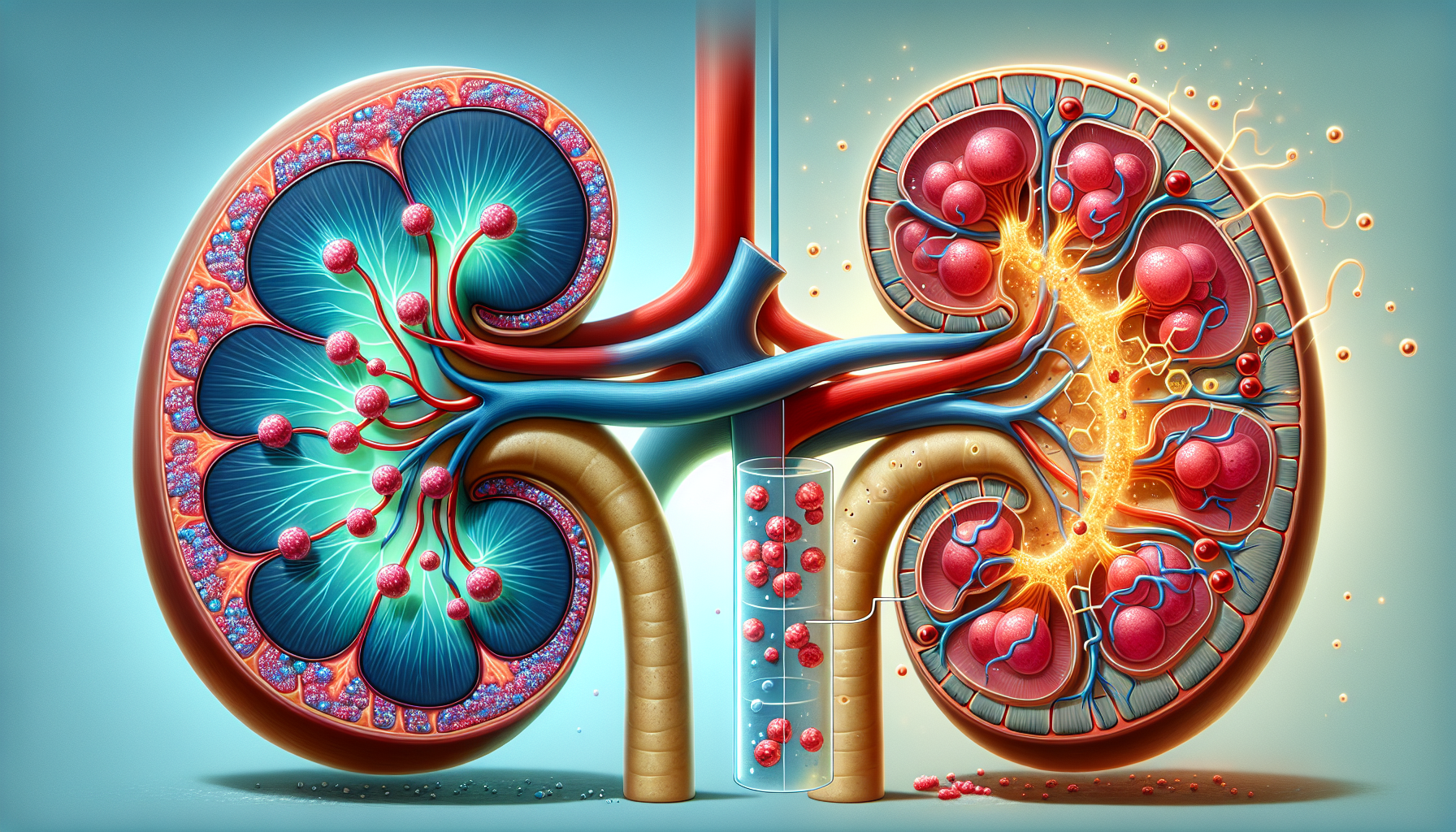
Type 1 diabetes affects the body's ability to produce insulin, requiring lifelong insulin therapy. But the challenges don't stop there. Over time, high blood sugar levels can damage the tiny blood vessels in the kidneys, leading to chronic kidney disease. Think of it like a coffee filter that's slowly getting clogged, the kidneys' ability to filter waste becomes increasingly compromised.
Despite this well-known complication, people with Type 1 diabetes have been largely excluded from clinical trials testing new kidney treatments. Most studies focus on Type 2 diabetes patients, leaving Type 1 patients with limited treatment options that haven't changed significantly since the 1990s.
The FINE-ONE Breakthrough
The FINE-ONE trial enrolled 242 adults with Type 1 diabetes and chronic kidney disease, randomly assigning them to receive either finerenone (10-20 mg daily) or a placebo. Finerenone, already approved for Type 2 diabetes patients with kidney disease, works by blocking the mineralocorticoid receptor, think of it as turning off a switch that normally triggers kidney damage.
The drug operates like a skilled bouncer at the kidney's cellular level, preventing harmful processes that lead to inflammation and fibrosis. When these processes are blocked, the kidneys can better maintain their filtering function and structural integrity.
Promising Results
After six months of treatment, the results were striking. Patients taking finerenone showed approximately a 25% reduction in their urinary albumin-to-creatinine ratio (UACR). This biomarker is crucial because elevated levels indicate that protein is leaking through damaged kidney filters, a key sign of kidney deterioration.
To put this in perspective, imagine your kidneys as sophisticated filtration systems in a water treatment plant. When they're healthy, they keep essential proteins in your bloodstream while filtering out waste. When damaged, proteins leak through like water seeping through a cracked dam. Finerenone appears to help repair these "cracks."
A New Era for Type 1 Diabetes Care
The safety profile proved encouraging, with the drug being well-tolerated overall. The most notable side effect was a modest increase in blood potassium levels (0.14 mmol per liter on average), which is manageable with proper monitoring.
If approved specifically for Type 1 diabetes, finerenone would represent the first new treatment option for kidney complications in this population in nearly three decades. This could mark the beginning of a new era where Type 1 diabetes patients are no longer medical afterthoughts in kidney disease research, but active participants in the development of life-changing treatments.
The implications extend beyond just one drug. This successful trial demonstrates that Type 1 diabetes patients can and should be included in kidney protection research, potentially opening doors for testing other promising therapies in this long-neglected population.
Real-World Impact
Quick Takeaways
- First new kidney treatment option for Type 1 diabetes patients in 30 years
- Could help protect up to 40% of Type 1 diabetics who develop chronic kidney disease
- 25% reduction in kidney damage markers offers hope for slowing disease progression
- Establishes precedent for including Type 1 diabetes patients in future kidney drug trials
- Well-tolerated safety profile makes treatment accessible for most patients
The FINE-ONE trial results could fundamentally reshape treatment approaches for the estimated 1.6 million Americans living with Type 1 diabetes. With up to 40% of these patients destined to develop chronic kidney disease, having an effective treatment option could prevent thousands from progressing to dialysis or kidney transplantation. The 25% reduction in albumin levels observed in the study suggests meaningful kidney protection that could translate to years of preserved kidney function.
Beyond immediate patient benefits, this research establishes a crucial precedent for pharmaceutical companies and researchers to include Type 1 diabetes populations in future kidney protection studies. This could accelerate the development pipeline for additional treatments, ending decades of therapeutic neglect for this patient population.
The economic implications are equally significant. Kidney disease progression leads to expensive complications including dialysis (averaging $90,000 annually per patient) and transplantation. If finerenone can delay or prevent these outcomes, it could save healthcare systems billions while dramatically improving patient quality of life and survival rates.
For Researchers & Scientists - Technical Section
The FINE-ONE trial employed a Phase III randomized, double-blind, placebo-controlled design to evaluate finerenone's efficacy in 242 adults with Type 1 diabetes and chronic kidney disease. Participants were randomized to receive finerenone (10-20 mg daily) or matching placebo, with the primary endpoint being change in urinary albumin-to-creatinine ratio over 6 months. The study methodology followed rigorous clinical trial standards with careful monitoring of safety parameters, particularly serum potassium levels given the drug's mechanism of action.
Methodology & Approach
Methodology & Approach
The FINE-ONE investigators implemented a robust Phase III randomized controlled trial design, enrolling 242 adults with Type 1 diabetes and established chronic kidney disease. The study utilized a double-blind, placebo-controlled methodology with participants randomized to receive either finerenone (administered at 10-20 mg daily doses based on kidney function) or matching placebo over a 6-month treatment period.
The primary efficacy endpoint focused on changes in urinary albumin-to-creatinine ratio (UACR), a well-validated biomarker for kidney damage progression. Secondary assessments included comprehensive safety monitoring with particular attention to serum potassium levels, given finerenone's mechanism as a mineralocorticoid receptor antagonist. The trial design incorporated regular laboratory monitoring and clinical assessments to ensure participant safety while gathering robust efficacy data in this previously understudied population.
Key Techniques & Methods
- Randomized Controlled Trial: Double-blind study design comparing finerenone to placebo in Type 1 diabetes patients
- Biomarker Analysis: Measurement of urinary albumin-to-creatinine ratio as primary efficacy endpoint
- Dose Optimization: Tailored finerenone dosing (10-20 mg daily) based on individual kidney function
- Safety Monitoring: Comprehensive tracking of serum potassium levels and adverse events
- Patient Stratification: Careful selection of Type 1 diabetes patients with established chronic kidney disease
- Statistical Analysis: Rigorous evaluation of treatment effects over 6-month study period
Key Findings & Results
- Finerenone reduced urinary albumin-to-creatinine ratio by approximately 25% over 6 months
- Treatment was well-tolerated with modest potassium increases of 0.14 mmol per liter
- Hyperkalemia occurred in 10% of finerenone patients versus 3% of placebo patients
- Only one serious adverse event related to elevated potassium levels was recorded
- 242 Type 1 diabetes patients with chronic kidney disease successfully completed the trial
- Results demonstrate first successful kidney protection therapy for Type 1 diabetes in 30 years
Conclusions
The FINE-ONE trial successfully demonstrates that finerenone provides significant kidney protection in Type 1 diabetes patients with chronic kidney disease, as evidenced by the approximately 25% reduction in urinary albumin-to-creatinine ratio over 6 months. The favorable safety profile, with manageable potassium elevations and minimal serious adverse events, supports the drug's therapeutic potential in this previously understudied population. These findings represent a critical advancement for Type 1 diabetes care, potentially offering the first new kidney protection treatment in nearly three decades for a population that has been systematically excluded from previous clinical trials.
-- readers