The Human Brain Code: How Evolution Rewrote Our Neural Blueprint
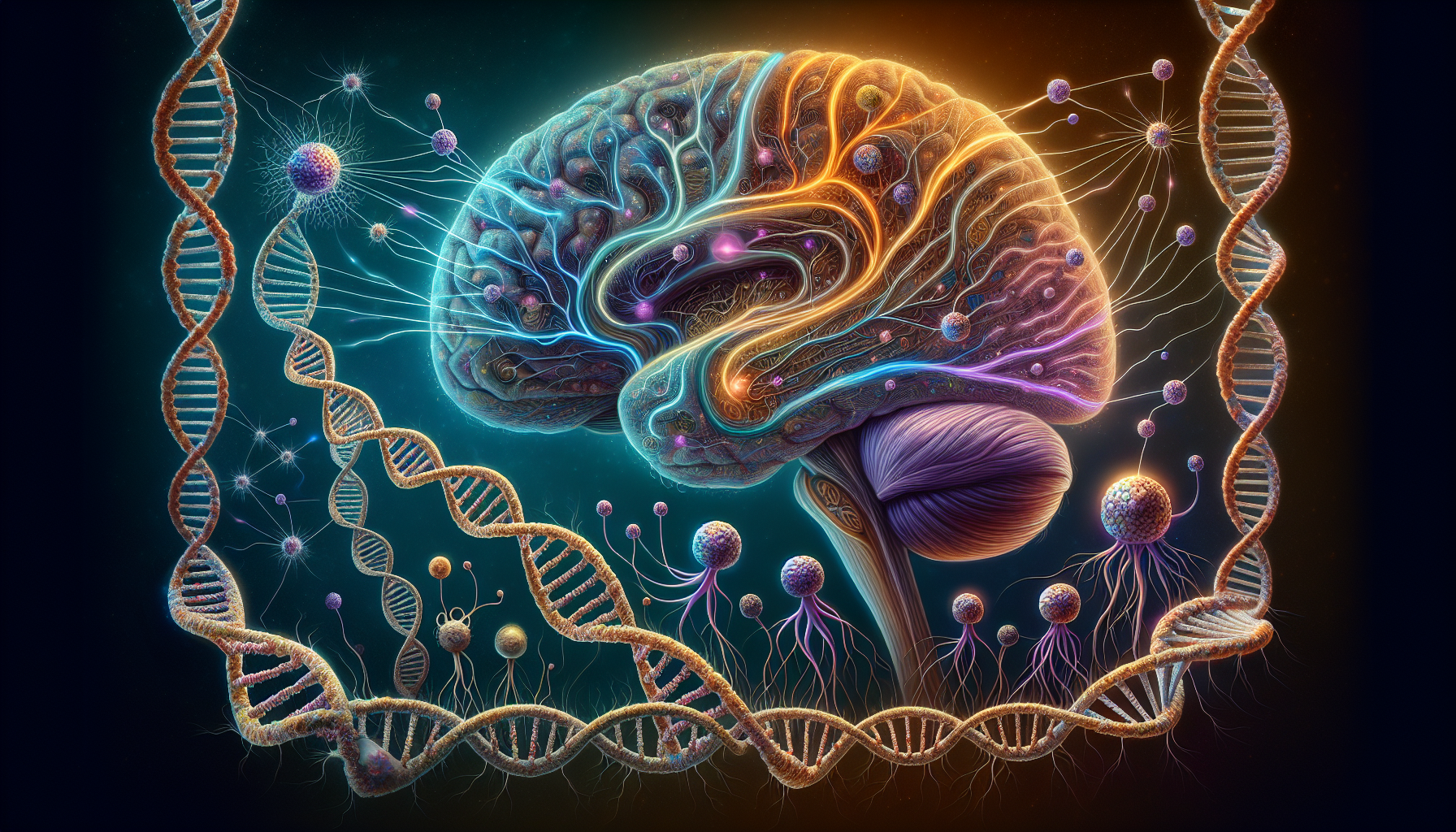
What makes the human brain uniquely capable of creating art, solving complex problems, and forming intricate societies? The answer lies hidden in our DNA, where evolution has been quietly rewriting the instruction manual for nearly 300,000 years.
Listen to This Article
AI-generated discussion • ~6 min
Imagine if you could peek into the genetic instruction manual that built the human brain and compare it side-by-side with the blueprints for our closest evolutionary relatives. What changes would you find? What genetic edits transformed our ancestors from tree-dwelling primates into the complex, creative beings capable of writing symphonies and splitting atoms?
A groundbreaking new study published in Nature Neuroscience has done exactly that, using thousands of genomes from mammals, primates, ancient humans, and modern humans to identify the specific genetic signatures that make our brains uniquely human. The results reveal not just how we evolved, but also shed light on why certain neurological disorders affect us today.
Think of evolution as a master editor, carefully revising the genetic manuscript over millions of years. This research team developed sophisticated computational tools to identify where evolution made its most important edits specifically in the human lineage. They focused on genomic regions bearing signatures of selection, like a detective looking for fingerprints at a crime scene.
The approach was remarkably comprehensive. Instead of just identifying genetic changes, the researchers traced how these modifications actually affect brain development and function. They used single-cell transcriptomics and epigenomics to understand which genes are turned on or off in specific types of brain cells, much like examining individual instruments in an orchestra rather than just listening to the overall symphony.
The results were striking. The team discovered convergent regulatory changes in genes involved in three critical areas: synaptic plasticity, cortical expansion, and neuronal connectivity. These changes distinguish human brain development from that of other primates in fundamental ways.
Perhaps most intriguingly, many of these human-specific regulatory elements overlap with genetic regions associated with neurological disorders including schizophrenia and autism spectrum disorder. This discovery suggests that the same genetic changes that gave us our remarkable cognitive abilities may also predispose us to certain mental health conditions, like a double-edged evolutionary sword.
The research revealed that different brain cell types experienced distinct evolutionary pressures. Think of it like renovating a house where different rooms needed different upgrades. Some changes affected neurons responsible for communication between brain regions, while others influenced the support cells that maintain brain health. Remarkably, some genetic changes were selected across multiple independent evolutionary timescales, suggesting they provided consistent advantages throughout human evolution.
The methodology represents a significant advance in evolutionary neuroscience. By starting with genetic changes under positive selection and then tracing their cellular-level effects, the researchers created a mechanistic framework for understanding how our brains became uniquely human. It's like having both the architectural plans and the construction photos of brain evolution.
This work bridges the gap between deep evolutionary biology and modern medicine in unprecedented ways. By understanding which genetic variants evolution selected for enhanced brain function, researchers can better comprehend why certain individuals are susceptible to neurological disorders. The findings suggest that our most remarkable human traits, our capacity for complex thought, creativity, and social cooperation, come with genetic trade-offs that influence mental health.
The implications extend far beyond academic curiosity. As we develop new treatments for neurological and psychiatric disorders, understanding the evolutionary context of these conditions could lead to more targeted and effective therapies. We're not just studying disease; we're understanding the genetic legacy of human evolution itself.
Real-World Impact
Quick Takeaways
- Provides new framework for understanding genetic basis of neurological disorders like schizophrenia and autism
- Identifies specific genetic targets for developing brain disorder treatments
- Reveals evolutionary trade-offs between enhanced cognition and disease susceptibility
- Offers insights into human cognitive uniqueness compared to other primates
- Creates foundation for personalized medicine approaches based on evolutionary genetics
This research fundamentally changes how we understand the relationship between human evolution and modern neurological disorders. By identifying the specific genetic changes that shaped our unique cognitive abilities, scientists now have a roadmap for understanding why certain brain disorders exist and how they might be treated more effectively.
The discovery that human-specific regulatory elements overlap with disease risk loci suggests that our evolutionary advantages came with genetic trade-offs. This insight could revolutionize drug development by helping researchers understand not just what goes wrong in neurological disorders, but why certain genetic variants that cause problems were actually beneficial during human evolution.
Beyond medical applications, this work provides unprecedented insight into what makes humans uniquely capable of complex thought, creativity, and social cooperation. Understanding these genetic foundations could inform everything from educational approaches to artificial intelligence development, as we better comprehend the biological basis of human cognitive excellence.
For Researchers & Scientists - Technical Section
The researchers employed quantitative computational approaches to identify human-specific genomic selection signatures across thousands of mammalian, primate, ancient human, and modern human genomes. They integrated comparative genomics with functional studies using single-cell transcriptomics and epigenomics to trace how selected variants influence gene regulation in specific brain cell types, connecting evolutionary genomic signatures to cellular-level phenotypes in brain development.
Methodology & Approach
Methodology & Approach
The research team developed a multi-layered approach beginning with comparative genomic analysis across thousands of genomes from mammals, non-human primates, ancient humans, and modern humans. They employed quantitative computational methods to identify regions showing signatures of positive selection specifically in the human lineage, focusing on regulatory elements that control gene expression rather than just protein-coding sequences.
The functional validation phase integrated single-cell transcriptomics and epigenomics to determine how identified variants actually affect gene regulation in different brain cell types. This cellular-level analysis allowed researchers to trace the mechanistic pathway from genetic change to functional outcome, creating a comprehensive framework linking evolutionary genomics to neurobiology. The approach represents a significant methodological advance by connecting deep evolutionary timescales to modern cellular phenotypes.
Key Techniques & Methods
- Comparative Genomics: Analysis of genetic differences across thousands of mammalian and primate genomes to identify human-specific changes
- Selection Signature Detection: Computational methods to identify DNA regions that show evidence of positive evolutionary selection
- Single-Cell Transcriptomics: Examination of gene expression patterns in individual brain cells to understand cellular-level effects
- Epigenomic Analysis: Study of chemical modifications to DNA that control gene expression without changing the underlying sequence
- Regulatory Element Mapping: Identification of DNA sequences that control when and where genes are turned on or off
- Cross-Species Functional Validation: Testing whether human-specific genetic variants actually affect brain cell function and development
Key Findings & Results
- Identified convergent regulatory changes in genes controlling synaptic plasticity, cortical expansion, and neuronal connectivity
- Multiple human-specific regulatory elements overlap with genetic risk factors for schizophrenia and autism spectrum disorder
- Different brain cell types experienced distinct evolutionary pressures during human brain evolution
- Certain beneficial genetic changes were selected across multiple independent evolutionary timescales
- Human-specific variants directly influence gene regulation in specific brain cell populations
- Evolutionary genomic signatures successfully predict cellular-level phenotypes in brain development
Conclusions
The study establishes a mechanistic framework connecting human-specific genetic evolution to unique cognitive and social capacities through cellular-level brain development changes. The significant overlap between evolutionary regulatory elements and modern disease risk loci demonstrates that enhanced human cognitive abilities came with genetic trade-offs affecting neurological disorder susceptibility. This work successfully bridges evolutionary biology and modern medicine, providing both fundamental insights into human brain evolution and practical applications for understanding neurological disease mechanisms.
-- readers