Cancer Treatment Revolution: Single Injection Replaces Complex CAR T-Cell Manufacturing
What if the most promising cancer treatment could be delivered with a simple injection instead of a complex, expensive laboratory process? Scientists have just made this revolutionary leap possible.
Listen to This Article
AI-generated discussion • ~6 min
Cancer treatment is on the verge of a revolutionary transformation. Imagine if one of medicine's most promising therapies could be delivered not through weeks of complex laboratory processing costing over $400,000, but with a single injection. This seemingly impossible dream has just moved dramatically closer to reality.
CAR T-cell therapy represents one of the most significant breakthroughs in cancer treatment in recent decades. Think of it like reprogramming your body's security system to recognize and eliminate specific threats. Currently, this process works like sending your security guards away for extensive retraining at a specialized academy, then bringing them back weeks later, hopefully in better shape than when they left.
The traditional ex vivo approach requires extracting a patient's T cells, shipping them to specialized facilities, genetically modifying them in laboratory conditions, growing millions of copies, and then infusing them back into the patient. This process is like taking apart your car engine, sending it to a specialized factory for modifications, waiting weeks for the work to be completed, and hoping it still runs when you get it back.
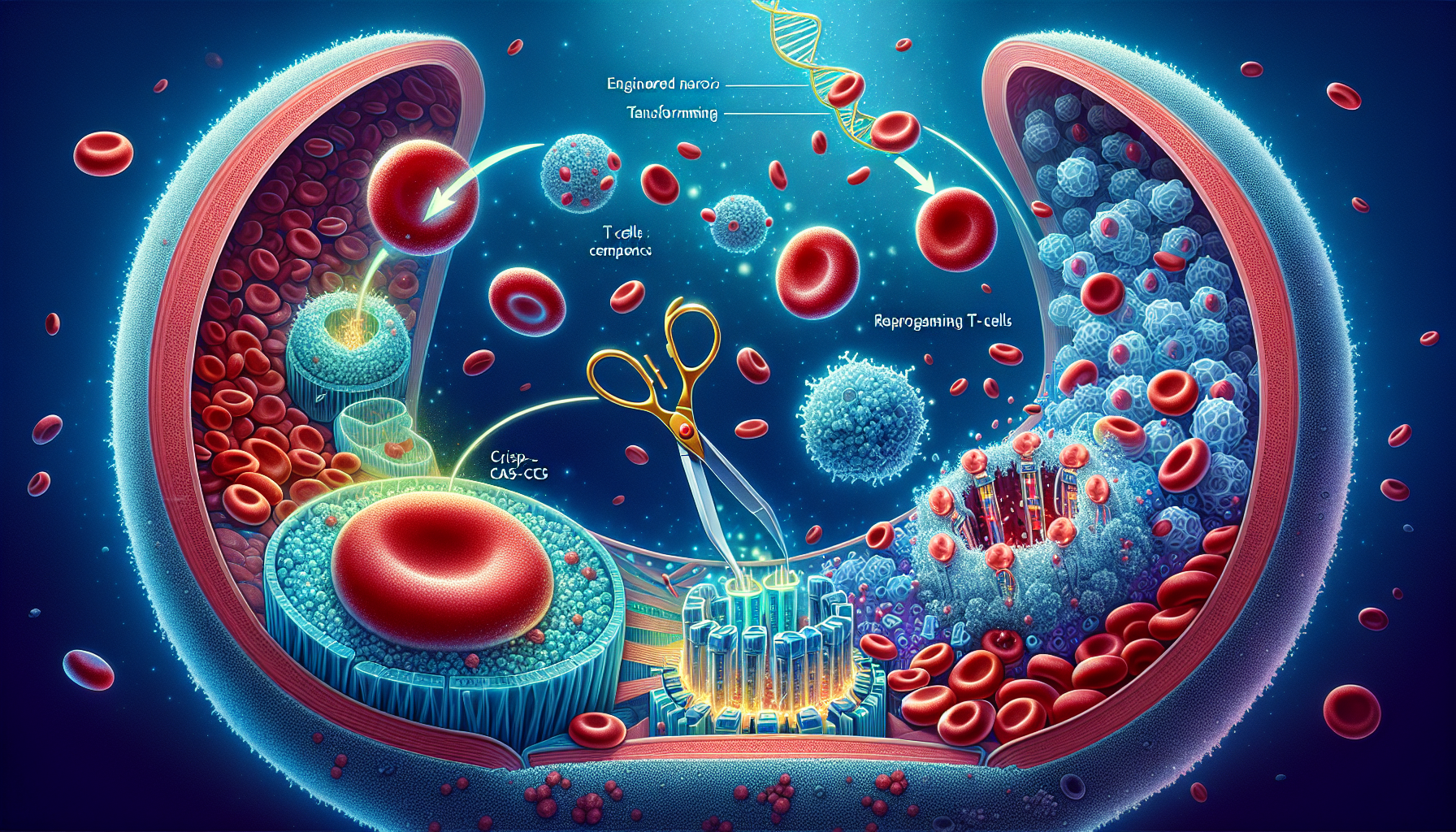
Dr. William Nyberg, Pierre-Louis Bernard, and their team at the University of California San Francisco, led by senior author Justin Eyquem, have developed something extraordinary: a way to perform this reprogramming directly inside the patient's body. Their innovation centers on a dual-particle CRISPR-Cas9 delivery system that targets only T cells circulating in the bloodstream.
The breakthrough lies in achieving site-specific integration of large DNA payloads. Think of it like having a precision GPS system that can navigate directly to the right address in your genetic code, rather than randomly dropping off packages throughout the neighborhood. This ensures the modifications are stable and predictable.
In mouse models, the results were remarkable. A single intravenous injection successfully transformed circulating T cells into functional CAR T cells. These newly reprogrammed cells didn't just survive, they thrived. Within two weeks, they had completely eliminated aggressive leukemia in the test subjects.
The versatility of this approach became clear as researchers tested it against multiple cancer types. The in vivo-generated CAR T cells proved effective against multiple myeloma and solid tumors, demonstrating comparable efficacy to traditional laboratory-manufactured CAR T cells. It's like having a universal key that works just as well as custom-made locks.
The implications extend far beyond convenience. This approach could democratize access to CAR T-cell therapy, making it available in hospitals worldwide rather than limiting it to specialized centers with extensive laboratory infrastructure. For patients in remote areas or developing countries, this could mean the difference between life and death.
The economic impact could be transformative. By eliminating the need for specialized manufacturing facilities, clean rooms, and weeks of laboratory processing, this approach could reduce costs dramatically while increasing treatment speed. Instead of waiting weeks while cancer potentially progresses, patients could receive treatment immediately.
While these results come from mouse models, the precision and effectiveness demonstrated suggest significant potential for human application. The research represents a fundamental shift in thinking about cell therapy, moving from complex manufacturing processes to elegant in vivo solutions.
This breakthrough exemplifies how innovative thinking can transform seemingly intractable problems. By reimagining the entire process of CAR T-cell therapy, these researchers may have opened the door to making one of medicine's most powerful tools accessible to patients worldwide.
Real-World Impact
Quick Takeaways
- Could reduce CAR T-cell therapy costs from over $400,000 to a fraction of current prices
- Eliminates weeks-long manufacturing delays, potentially starting treatment within days
- Makes advanced cancer therapy accessible in hospitals worldwide, not just specialized centers
- Could save thousands of lives by providing treatment to patients in remote or underserved areas
- Reduces risk of cell deterioration during manufacturing that sometimes causes treatment failure
The potential impact of this breakthrough extends far beyond the laboratory, promising to fundamentally transform cancer care accessibility and economics. Currently, CAR T-cell therapy remains limited to major medical centers with specialized manufacturing capabilities, often requiring patients to travel hundreds of miles and wait weeks for treatment while their cancer potentially progresses. This in vivo approach could democratize access, allowing any hospital with basic infusion capabilities to deliver this life-saving therapy.
The economic implications are equally profound. By eliminating the need for specialized clean rooms, extensive laboratory processing, and weeks of cell culture, treatment costs could drop dramatically from the current $400,000+ price tag. This cost reduction could make the therapy accessible to healthcare systems worldwide, including in developing countries where advanced cancer treatments are currently unavailable. For healthcare providers, the simplified logistics could mean treating more patients with existing resources.
Perhaps most importantly, this approach could save countless lives by eliminating manufacturing delays and failures. Current CAR T-cell therapy sometimes fails because cells deteriorate during the weeks-long laboratory process, forcing patients to undergo the entire procedure again. With in vivo reprogramming, treatment could begin immediately upon diagnosis, potentially catching cancers before they become more aggressive or develop resistance mechanisms.
For Researchers & Scientists - Technical Section
The researchers developed a sophisticated dual-particle CRISPR-Cas9 delivery system capable of achieving site-specific integration of large transgene payloads directly into circulating T cells in vivo. Their methodology involved engineering particles that specifically target T cells while avoiding other immune cell populations, utilizing precise genetic integration rather than random insertion to ensure stable and predictable transgene expression. The system successfully demonstrated the ability to reprogram T cells into functional CAR T cells through a single intravenous injection, achieving therapeutic efficacy comparable to traditional ex vivo manufactured CAR T cells across multiple cancer models including leukemia, multiple myeloma, and solid tumors.
Methodology & Approach
Methodology & Approach
The research team engineered a dual-particle CRISPR-Cas9 delivery system specifically designed for in vivo T-cell reprogramming. The first particle delivers the Cas9 nuclease and guide RNAs for site-specific DNA cutting, while the second particle carries the large DNA payload containing the CAR construct. This dual-particle approach overcomes the packaging limitations of single-vector systems while maintaining targeting specificity for T cells.
The targeting mechanism utilizes surface markers unique to T cells, ensuring that the genetic modifications occur exclusively in the intended cell population without affecting other immune cells. The researchers employed site-specific integration techniques rather than random insertion, directing the CAR construct to predetermined genomic loci known for stable expression. This approach eliminates the variability associated with random integration and ensures consistent therapeutic performance across treated T cells.
Validation studies were conducted in multiple mouse models representing different cancer types, including aggressive leukemia, multiple myeloma, and solid tumor models. The team compared the efficacy of in vivo-generated CAR T cells directly against traditional ex vivo manufactured CAR T cells using identical CAR designs, providing direct performance comparisons under controlled experimental conditions.
Key Techniques & Methods
- Dual-particle CRISPR-Cas9 delivery: System using two separate particles to deliver gene-editing components and therapeutic payloads
- Site-specific genomic integration: Precise insertion of genetic material at predetermined chromosomal locations
- In vivo T-cell targeting: Selective delivery of therapeutic agents to T cells circulating in the bloodstream
- Large transgene payload delivery: Transportation of complete CAR constructs including signaling and activation domains
- Cell-type specific particle engineering: Development of delivery vehicles that recognize and enter only target cell types
- Comparative efficacy analysis: Direct performance comparison between in vivo and ex vivo generated CAR T cells
Key Findings & Results
- Single intravenous injection successfully reprogrammed circulating T cells into functional CAR T cells
- In vivo-generated CAR T cells eliminated aggressive leukemia within two weeks of treatment
- Treatment proved effective against multiple cancer types including leukemia, multiple myeloma, and solid tumors
- Efficacy was comparable to traditional ex vivo manufactured CAR T-cell therapy
- System achieved precise T-cell targeting without affecting other immune cell populations
- Site-specific integration ensured stable and predictable transgene expression in treated cells
Conclusions
The study demonstrates that in vivo T-cell reprogramming represents a viable alternative to current ex vivo CAR T-cell manufacturing approaches, with the potential to dramatically improve accessibility and reduce costs while maintaining therapeutic efficacy. The successful site-specific integration of large therapeutic payloads directly into circulating T cells addresses fundamental limitations of current cell therapy manufacturing. The comparable efficacy observed across multiple cancer models suggests broad applicability of this approach. This work establishes a foundation for translating in vivo cell reprogramming technologies toward clinical applications, potentially transforming the landscape of adoptive cell therapy from a specialized manufacturing-dependent process to an accessible injection-based treatment modality.
-- readers