Tin-Based Magnets Shatter Performance Records: A Quantum Leap Forward
What if the secret to revolutionary quantum computers wasn't hidden in exotic materials, but in humble tin arranged in microscopic rings? Scientists have just discovered that tin-based molecular magnets can outperform nearly all known competitors.
Listen to This Article
AI-generated discussion • ~6 min
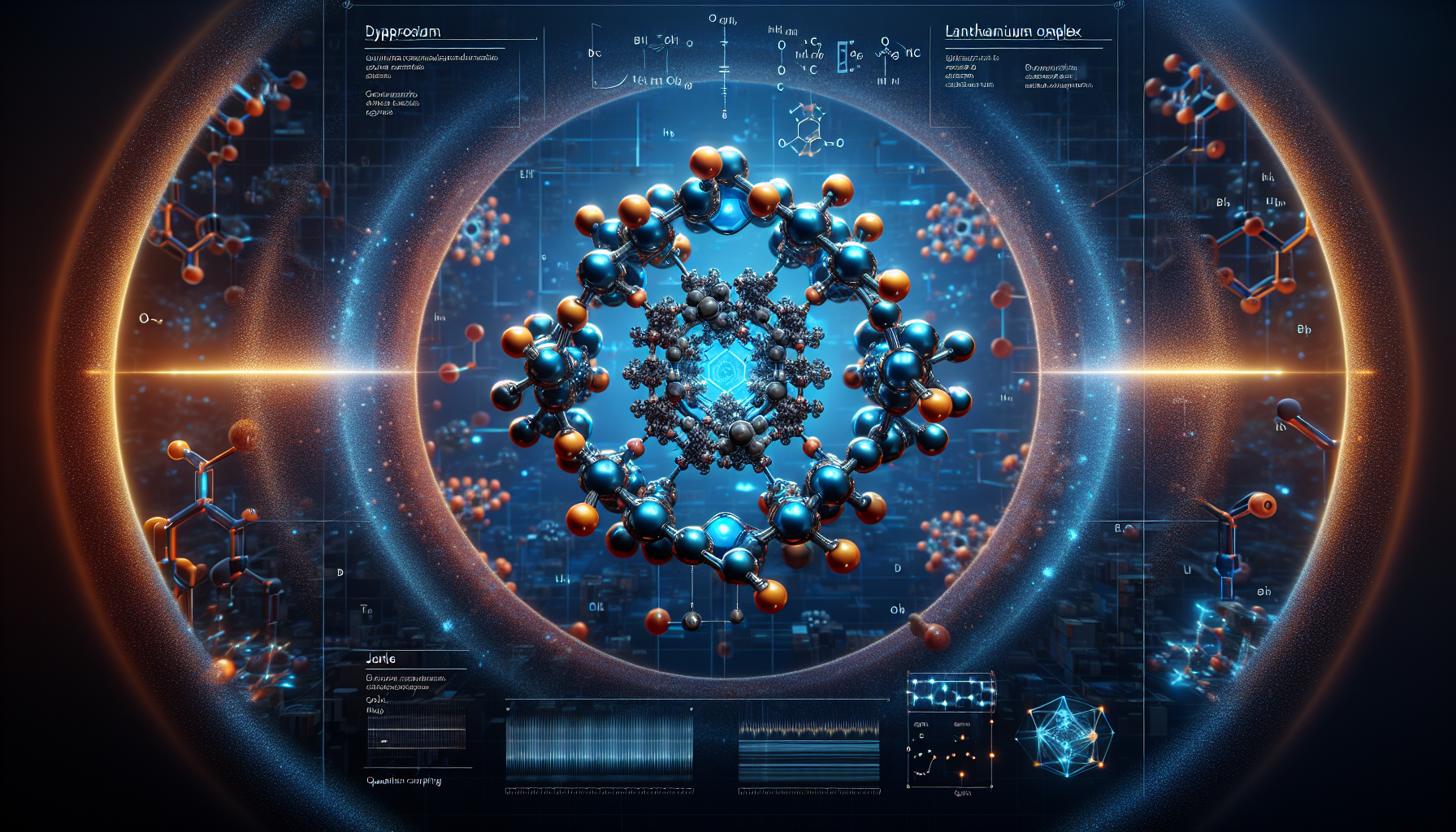
Imagine a magnet so small you'd need millions to span the width of a human hair, yet so powerful it could revolutionize how we store data and build quantum computers. That's exactly what researchers have achieved by creating the first homoleptic bis(stannolediide) complexes using terbium and dysprosium, two rare earth metals with extraordinary magnetic properties.
The world of molecular magnetism has long been dominated by carbon-based ring systems, but this new research opens an entirely different frontier. Think of it like discovering that bicycle wheels made from a completely different material could suddenly make bikes fly, when everyone had been focused on improving the spokes.
Single-molecule magnets (SMMs) are the molecular equivalent of tiny compass needles that can point in a specific direction and remember that orientation. The challenge has always been making them stable enough to maintain their magnetic memory at useful temperatures and for extended periods.
The research team, led by scientists who specialize in lanthanide chemistry, created two nearly identical molecular structures. The only difference was swapping out the central metal atom: one version contained dysprosium, the other terbium. It's like having two identical cars with different engines and discovering one can suddenly fly while the other barely runs.
The results were dramatically different. The dysprosium version achieved an effective energy barrier (Ueff) of 1,502 K. To put this in perspective, imagine trying to flip a coin that's buried under a mountain 1,502 meters high, that's how much energy it takes to change this magnet's direction.
Meanwhile, the terbium version behaved like a completely different creature altogether. It showed only weak magnetic properties and was dominated by Raman-process relaxation below 6 K. This dramatic contrast between two adjacent elements on the periodic table highlights something crucial: crystal-field symmetry and orbital angular momentum play decisive roles in determining how these molecular magnets behave.
The breakthrough lies not just in the impressive numbers, but in the completely new approach. Previous high-performing SMMs relied heavily on cyclopentadienyl-based systems. By introducing tin-based ring ligands, the researchers have opened up an entirely new design space for molecular magnets.
Think of this like architects discovering they can build skyscrapers with a completely new type of foundation. The stannolediide ligands provide a different electronic environment around the lanthanide metals, creating unique magnetic properties that weren't possible with traditional organic ligands.
The implications extend far beyond academic curiosity. SMMs are leading candidates for quantum bits (qubits) in quantum computers and for ultra-high-density data storage. The ability to maintain magnetic memory at higher temperatures and with greater stability directly translates to more practical quantum computing applications.
This research represents a fundamental shift in how scientists approach molecular magnet design. Rather than incremental improvements to existing systems, the tin-based approach offers a completely new platform for engineering magnetic properties. It's the difference between improving a horse-drawn carriage and inventing the automobile.
Real-World Impact
Quick Takeaways
- Could enable quantum computers that operate at higher temperatures, making them more practical and cost-effective
- Opens pathway to ultra-high-density data storage at the molecular level, potentially revolutionizing information technology
- Provides new design principles for creating custom magnetic materials with tailored properties
- May lead to more stable qubits for quantum computing applications, reducing error rates
- Establishes tin-based ligands as a new platform for advanced materials beyond traditional carbon-based systems
The development of tin-based single-molecule magnets represents a paradigm shift in quantum materials science with profound implications for next-generation computing technologies. The exceptional performance of the dysprosium complex, with its record-setting energy barrier and blocking temperature, directly addresses one of the key challenges in quantum computing: maintaining quantum coherence at practically achievable temperatures.
This breakthrough could accelerate the development of room-temperature quantum computers by providing more stable qubits that retain their quantum properties under less extreme cooling conditions. Additionally, the molecular-level data storage capabilities could lead to storage devices with unprecedented density, potentially storing entire libraries of information in devices smaller than current memory chips.
The establishment of tin-based ligand systems as a viable alternative to traditional organic frameworks opens entirely new avenues for materials design, potentially leading to discoveries in catalysis, energy storage, and advanced electronics that were previously impossible with conventional approaches.
For Researchers & Scientists - Technical Section
The research employed systematic synthesis of homoleptic bis(stannolediide) complexes using trivalent terbium and dysprosium precursors, followed by comprehensive magnetic characterization including AC susceptibility measurements to determine energy barriers and blocking temperatures. The isostructural nature of the complexes enabled direct comparison of magnetic relaxation mechanisms, revealing the critical role of crystal-field effects and orbital angular momentum in determining single-molecule magnet behavior.
Methodology & Approach
Methodology & Approach
The synthetic approach involved the preparation of tin-based ring ligands (stannolediides) followed by their coordination to trivalent lanthanide centers under strictly controlled conditions. The researchers employed advanced crystallographic techniques to confirm the isostructural nature of both complexes, ensuring that observed differences in magnetic behavior could be attributed solely to the identity of the central lanthanide ion.
Magnetic characterization utilized temperature-dependent AC susceptibility measurements to extract key parameters including effective energy barriers and blocking temperatures. The team performed detailed analysis of magnetic relaxation mechanisms, particularly focusing on identifying Raman-process contributions and quantum tunneling effects that influence the overall magnetic behavior of these novel tin-based systems.
Key Techniques & Methods
- Synthetic organometallic chemistry: Preparation of homoleptic bis(stannolediide) lanthanide complexes under inert atmosphere
- X-ray crystallography: Structural determination confirming isostructural nature of terbium and dysprosium complexes
- AC magnetic susceptibility: Temperature-dependent measurements to extract energy barriers and relaxation dynamics
- Variable-temperature magnetometry: Characterization of magnetic blocking temperatures and thermal stability
- Quantum mechanical modeling: Analysis of crystal-field effects and orbital angular momentum contributions
- Relaxation mechanism analysis: Identification of Raman processes and quantum tunneling pathways
Key Findings & Results
- Dysprosium complex achieved record-setting effective energy barrier of 1,502 K for magnetic relaxation
- Magnetic blocking temperature of 55 K places the dysprosium system among highest-performing SMMs known
- Terbium analogue showed dramatically different behavior with only weak Raman-dominated relaxation below 6 K
- First successful synthesis of homoleptic bis(stannolediide) complexes with trivalent lanthanides
- Demonstrated critical role of crystal-field symmetry in determining magnetic relaxation pathways
- Established tin-based ligands as viable alternative to traditional cyclopentadienyl-based SMM systems
Conclusions
The contrasting magnetic behaviors between structurally identical terbium and dysprosium bis(stannolediide) complexes demonstrate the paramount importance of electronic structure and crystal-field effects in single-molecule magnet design. The exceptional performance of the dysprosium system validates tin-based ligands as a promising new platform for high-performance molecular magnets, while the systematic comparison provides crucial insights for rational design of next-generation quantum materials with tailored magnetic properties.
-- readers