Digital Life Achieved: Scientists Create Complete Virtual Cell
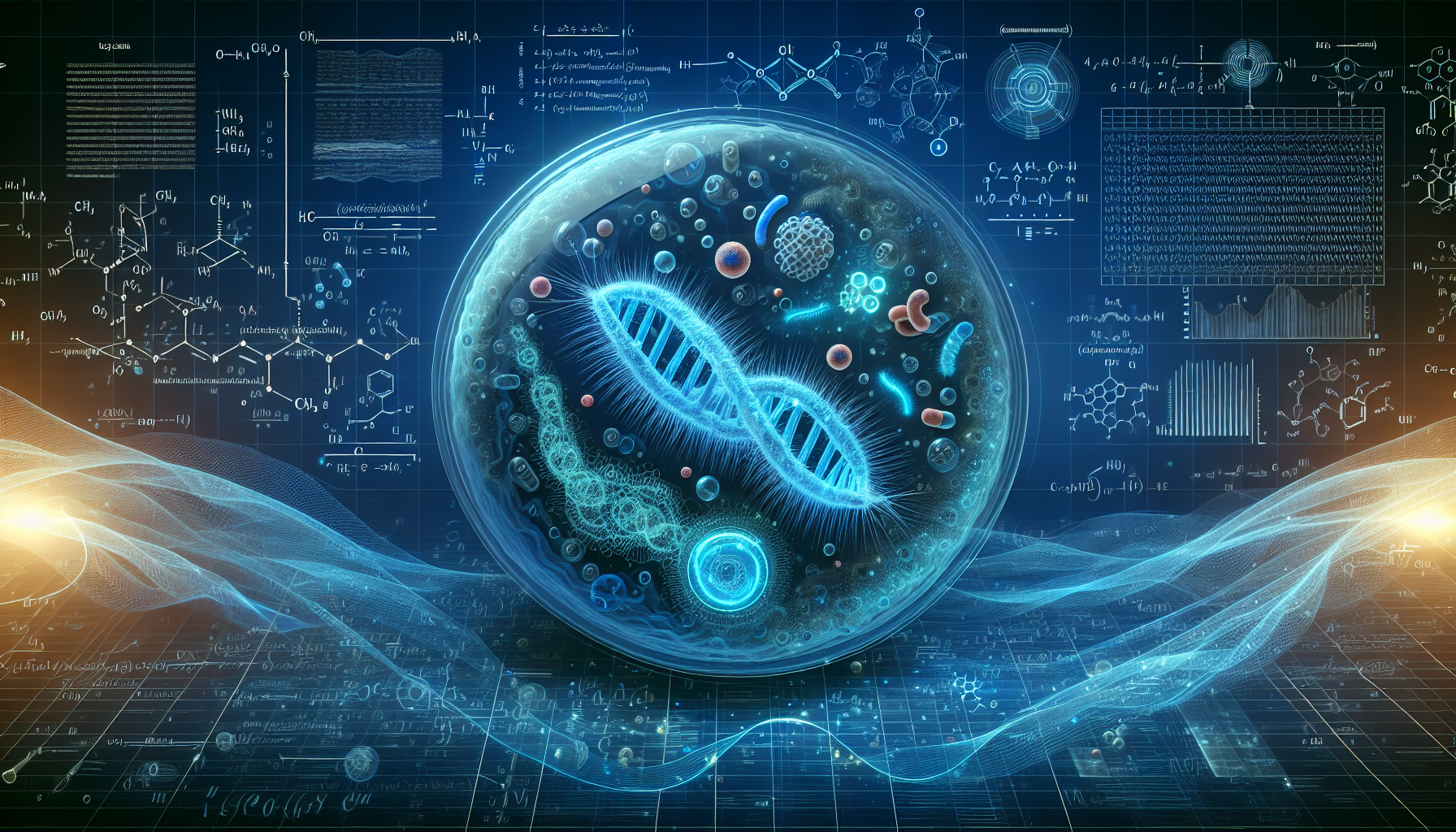
For the first time in scientific history, researchers have successfully created a complete digital twin of a living cell, simulating every molecular process from birth to division. This breakthrough brings us closer to understanding the fundamental mechanics of life itself.
Listen to This Article
AI-generated discussion • ~6 min
Imagine trying to understand how a massive factory works by watching every single worker, machine, and process simultaneously. That's essentially what scientists at the University of Illinois Urbana-Champaign, JCVI, and MIT have accomplished, but instead of a factory, they've created the first complete digital replica of a living cell.
Published in Cell journal, this landmark study presents the first-ever complete 4D simulation of JCVI-syn3A, the world's simplest known self-replicating cell. Think of it as the ultimate minimalist organism, a biological smartphone that's been stripped down to only the most essential apps needed to function.
The quest to create artificial life has captivated scientists for decades. JCVI-syn3A represents the ultimate minimal cell, created by systematically removing genes until only the absolutely essential ones remained. It's like taking apart a Swiss watch and rebuilding it with the fewest possible parts while keeping it ticking perfectly.
What makes this research revolutionary is its comprehensive approach. Previous cell simulations were like trying to understand a symphony by listening to individual instruments. This study conducted the entire orchestra, tracking every known biochemical process simultaneously throughout the cell's roughly 100-minute lifecycle.
The simulation integrates multiple biological layers like a sophisticated video game engine. It tracks DNA replication, gene expression, metabolic networks, and physical cell structure, all working together in real-time. Imagine orchestrating a dance where every dancer represents a different molecule, and they all need to move in perfect harmony.
The researchers discovered fascinating insights about cellular life. Spatial organization within the cell significantly affects gene expression timing, much like how the layout of a kitchen influences cooking efficiency. They observed that metabolic fluxes shift dynamically as the cell grows, similar to how a city's traffic patterns change throughout the day.
Perhaps most intriguingly, the simulation revealed how stochastic effects create cell-to-cell variability even in genetically identical populations. It's like having identical twins who develop slightly different personalities due to random life experiences, except this happens at the molecular level.
The accuracy of this virtual cell is remarkable. The simulation successfully reproduced experimentally observed growth rates and metabolite concentrations, essentially passing a comprehensive biological exam. The model accurately predicts protein abundances and their fluctuations, proving that this digital cell behaves just like its living counterpart.
This breakthrough represents a transformative advance in systems biology and computational biology. It brings us closer to a complete mechanistic understanding of what it means for a cell to be alive, moving beyond simple observation to predictive understanding.
The implications extend far beyond academic curiosity. This platform could guide the design of synthetic organisms with custom functions, potentially creating biological factories for producing medicines, biofuels, or environmental cleanup agents. It's like having a biological CAD program for designing living systems.
As we stand on the brink of truly understanding life's fundamental mechanics, this research opens doors to possibilities we're only beginning to imagine. The age of digital biology has officially begun.
Real-World Impact
Quick Takeaways
- Enables design of custom synthetic organisms for medicine production and environmental cleanup
- Provides platform for testing biological hypotheses without expensive laboratory experiments
- Accelerates drug development by predicting cellular responses to treatments
- Guides creation of minimal biological systems for biotechnology applications
- Advances understanding of fundamental life processes for medical breakthroughs
This breakthrough simulation technology could revolutionize biotechnology and medicine by providing an unprecedented platform for designing and testing biological systems. Researchers can now experiment with virtual cells to predict how genetic modifications will affect cellular behavior, dramatically reducing the time and cost of developing new biotechnologies.
The implications for synthetic biology are profound, as this platform could guide the creation of custom-designed organisms capable of producing life-saving medicines, breaking down environmental pollutants, or generating sustainable biofuels. By understanding exactly how minimal life functions, scientists can build more complex biological systems with confidence.
In pharmaceutical development, this technology offers the potential to accelerate drug discovery by predicting how cellular systems will respond to new treatments, potentially saving years of laboratory testing and bringing therapies to patients faster than ever before.
For Researchers & Scientists - Technical Section
The research team developed an integrated computational framework that simultaneously models biochemical reaction networks, gene expression dynamics, spatial cellular architecture, and molecular interactions within JCVI-syn3A throughout its complete cell cycle. Their approach combined stochastic modeling of gene expression with deterministic metabolic flux analysis and spatial molecular dynamics simulations, creating a unified platform that captures emergent behaviors arising from multi-scale biological interactions while maintaining quantitative accuracy against experimental benchmarks.
Methodology & Approach
Methodology & Approach
The researchers constructed a multi-scale computational framework integrating four key biological layers: biochemical reaction networks governing cellular metabolism, stochastic gene expression models capturing transcription and translation dynamics, spatial molecular dynamics simulations tracking protein interactions and cellular geometry, and cell cycle progression algorithms coordinating DNA replication and division processes.
The simulation employed hybrid modeling approaches, combining deterministic ordinary differential equations for metabolic fluxes with stochastic algorithms for gene expression events, while incorporating spatial constraints through molecular dynamics calculations. This integrated platform enabled simultaneous tracking of all known molecular processes within the 493-gene minimal cell throughout its approximately 100-minute reproductive cycle.
Key Techniques & Methods
- Multi-scale computational modeling: Integration of biochemical networks with spatial cellular dynamics
- Stochastic gene expression simulation: Random modeling of transcription and translation processes
- Metabolic flux analysis: Quantitative tracking of biochemical reaction rates throughout cell cycle
- Spatial molecular dynamics: 3D simulation of protein interactions and cellular architecture
- Hybrid deterministic-stochastic algorithms: Combined modeling approaches for different biological scales
- Cell cycle coordination modeling: Algorithmic representation of DNA replication and division timing
Key Findings & Results
- Spatial cellular organization directly influences gene expression timing and efficiency
- Metabolic flux rates shift dynamically throughout the 100-minute cell cycle
- Simulation accurately reproduces experimental growth rates and metabolite concentrations
- Stochastic gene expression creates measurable cell-to-cell variability in genetically identical populations
- Protein abundance predictions match experimental observations with high quantitative accuracy
- Emergent cellular behaviors arise from integrated genetic, metabolic, and geometric interactions
Conclusions
This work establishes the first complete mechanistic model of cellular life, demonstrating that complex biological behaviors can emerge from the integration of well-characterized molecular processes. The successful reproduction of experimental observations validates the computational framework's predictive capabilities, while revealing new insights into the spatial and temporal coordination of minimal cellular functions. The platform provides a transformative tool for systems biology research and synthetic organism design, bringing computational biology closer to true predictive understanding of living systems.
-- readers